
Table of Contents
- Introduction
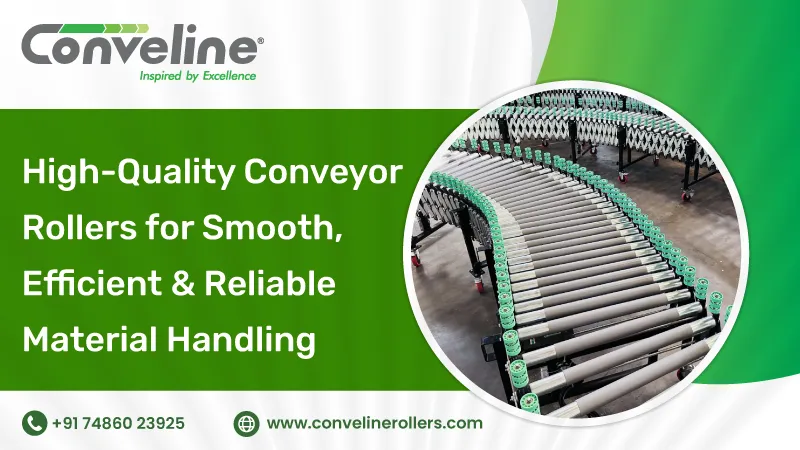
Material handling defines how fast you move goods, how safely you operate, and how much downtime you face. You depend on components that work every hour without failure. Conveyor rollers sit at the center of this process. When designed well, they support stable movement, reduce friction, and protect products across industries.
Modern industries demand speed, accuracy, and reliability. Warehouses process thousands of units daily. Manufacturing plants handle heavy loads on continuous lines. Logistics hubs depend on consistent flow to meet delivery timelines. In each case, Conveyor Rollers act as the backbone of the system. Their quality directly affects productivity, maintenance cost, and worker safety. Choosing the right rollers means fewer stoppages and smoother movement from start to finish.
Understanding Conveyor Rollers and Their Role
A conveyor roller supports and guides products along a conveyor system. It rotates smoothly to move goods with minimal resistance. Rollers come in different sizes, materials, and load capacities based on application needs. Light-duty rollers handle cartons and packages. Heavy-duty rollers carry pallets, metal components, or bulk materials.
When rollers fail, systems slow down or stop. Misalignment causes product damage. Poor material selection increases wear. Inconsistent rotation leads to noise and vibration. High-quality Conveyor Rollers reduce these risks by offering uniform rotation, strong load support, and long service life. This directly impacts operational efficiency and cost control.
Industries Using Conveyor Rollers
You see conveyor rollers across many sectors. Manufacturing plants use them for assembly lines and part transfer. Warehouses rely on them for sorting and order fulfillment. Food processing units need rollers that support hygiene and easy cleaning. Packaging lines depend on accurate movement for labeling and sealing. Mining and heavy industries require rollers that handle impact and abrasive materials.
Each industry demands specific features. Material choice, bearing type, and surface finish change based on usage. A skilled Conveyor Rollers Manufacturer understands these variations and delivers rollers that fit exact working conditions. This knowledge prevents mismatched components that lead to early failure.
Key Features of High-Quality Conveyor Rollers
Quality starts with material selection. Steel rollers offer strength for heavy loads. Stainless steel supports corrosion resistance in wet or food-grade environments. Polymer-coated rollers reduce noise and protect delicate goods. Precision bearings allow smooth rotation under continuous use.
Surface finish affects friction and wear. A consistent finish supports stable movement and reduces product damage. Proper sealing protects bearings from dust and moisture. Balanced construction limits vibration at higher speeds.
Design Precision and Load Capacity
Load capacity defines how much weight a roller handles without deformation. Accurate calculations during design prevent bending and uneven wear. Shaft diameter, wall thickness, and bearing strength all contribute to load performance. Precision manufacturing keeps tolerances tight, which supports alignment across the conveyor frame.
A trusted Conveyor Rollers Manufacturer tests load performance to match real-world conditions. This approach protects systems from unexpected failures and extends operational life. You gain confidence that rollers support both current demand and future scaling.
Efficiency and Cost Control
High-quality rollers reduce energy use by lowering rolling resistance. Motors work less to move products. This cuts power consumption and operating costs. Smooth rotation also reduces noise, which improves workplace conditions.
Maintenance cost drops when rollers last longer. You replace parts less often and avoid emergency repairs. Over time, this saves money and keeps production schedules stable. Investing in reliable Conveyor Rollers supports predictable operations and stronger margins.
Customization for Specific Applications
No two conveyor systems work the same way. Line speed, load type, and environment vary. Custom rollers match these factors. Diameter adjustments support different belt widths. Coatings handle temperature changes or chemical exposure. Special bearings suit high-speed lines or heavy impact zones.
Applications Across Industries
Automotive plants rely on rollers for assembly and inspection lines. Warehousing operations use them for sorting and dispatch. Food and beverage units benefit from hygienic roller designs. Logistics centers depend on reliable movement for time-sensitive deliveries. In each case, Conveyor Rollers support continuous flow and consistent output.
Manufacturing Standards and Quality Control
Quality depends on controlled manufacturing processes. Precision machining keeps components consistent. Assembly checks confirm smooth rotation. Inspection verifies dimensions and finish. Testing validates load and performance.
Safety and Workplace Impact
Smooth material flow reduces sudden stops and product drops. This protects workers from unexpected hazards. Lower noise levels create a better working environment. Stable systems also reduce the need for manual intervention.
Why Choose Us
Conveline Systems Pvt. Ltd focuses on delivering conveyor roller solutions built for real industrial conditions. The company combines technical expertise with practical understanding of material handling challenges. Each product reflects careful design, quality materials, and precise manufacturing. Conveline Systems Pvt. Ltd works closely with clients to match rollers with application needs, load requirements, and operating environments. This approach helps businesses achieve stable performance, reduced downtime, and long-term value from their conveyor systems.
Conclusion
Reliable material handling depends on component quality. Conveyor rollers play a critical role in system performance, safety, and cost control. High-quality rollers support smooth movement, reduce downtime, and protect products. Selecting the right design and working with an experienced manufacturer strengthens long-term operations. Conveline Systems Pvt. Ltd delivers roller solutions built for industrial demands, focusing on durability, precision, and application fit. When you invest in quality conveyor rollers, you invest in consistent output, controlled costs, and dependable material flow across your facility.
For detailed insights on high-quality conveyor rollers and expert material handling solutions, call +91 7486023925 or email info@conveline.com.
Key Takeaways
- Conveyor Roller Quality Directly Impacts Performance: High-quality conveyor rollers ensure smooth material flow, reduce friction, and minimize downtime, directly improving productivity and system reliability.
- Right Design Prevents Failures and Lowers Costs: Proper load capacity, material selection, and precision manufacturing prevent misalignment, excessive wear, and unexpected breakdowns—saving maintenance and energy costs.
- Industry-Specific Rollers Deliver Better Results: Different industries require different roller features. Custom-designed rollers perform better than standard options by matching load type, environment, and operating speed.
- Reliable Manufacturers Add Long-Term Value: An experienced conveyor rollers manufacturer provides tested designs, quality control, and technical support, reducing operational risk and extending system life.
- Investing in Quality Supports Future Growth: Durable, efficient conveyor rollers align with automation, higher speeds, and sustainability goals, preparing material handling systems for evolving industrial demands.


