
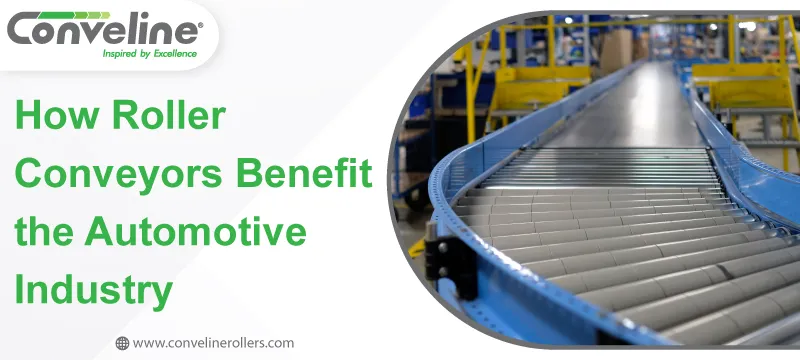
In a fast-moving and competitive automobile company, efficiency and precision are important for meeting manufacturing targets and customer demands. As vehicle designs become more complicated and consumer demands rise, manufacturers have to depend on reputable and effective material handling systems. One such system that has become a cornerstone in automotive manufacturing is the roller conveyor. Designed to move components, assemblies, and finished products with minimal effort, roller conveyors have become essential for improving operational flow, reducing labor strain, and increasing overall productivity.
Roller conveyors are used throughout automotive production lines—from moving chassis frames to transporting engine components, tires, and other parts. Their ability to handle heavy loads, adapt to various line layouts, and integrate with robotic systems makes them an ideal choice. This blog explores how automotive roller conveyors have evolved in the automotive sector and the numerous advantages they offer to manufacturers worldwide.
Evolution of Roller Conveyors in the Automotive Industry
The use of roller conveyors in manufacturing dates back to the early 20th century, notably with the introduction of the assembly line by Henry Ford. This innovation revolutionized mass production and set the foundation for modern material handling systems. Previous roller conveyors were simple, consisting of metal rollers coupled to a solid framework. They relied on gravity or manual labor to move products, limiting their use to short distances and lighter loads.
Over the decades, as demand for faster and more efficient production grew, roller conveyors evolved significantly. Today, they feature motorized drive systems, sensors, automation controls, and integration capabilities with advanced technologies such as robotics and AI. These enhancements have allowed manufacturers to automate large portions of their production lines, leading to faster cycle times and greater precision.
In the automotive industry, roller conveyors have been tailored to support specific tasks—such as assembly, inspection, testing, and packaging. From handling large car body parts to delicate electronic components, modern roller conveyors offer the reliability and flexibility needed to meet dynamic production requirements.
Benefits of Roller Conveyors in the Automotive Industry
- Increased Productivity and Efficiency
Roller conveyors automate the transportation of heavy and bulky automotive components, reducing the time it takes to move items from one station to another. This automation eliminates bottlenecks, enhances workflow, and supports continuous production. With less downtime and faster throughput, manufacturers can produce more units in less time, significantly improving output.
- Reduction in Manual Labor and Human Error
Manual handling of large and complex automotive parts can be labor-intensive and prone to errors. Roller conveyors eliminate much of the manual work involved in transporting materials, decreasing the chance of mistakes such as misplacement, damage, or delays. This also allows workers to focus on more skilled tasks, improving overall labor efficiency.
- Improved Safety and Ergonomics
Safety is a top concern in automotive manufacturing. Roller conveyors reduce the need for workers to lift or carry heavy parts, minimizing the risk of workplace injuries. Ergonomically designed conveyor systems help create a safer working environment, which is crucial for employee health and reducing compensation claims. Many roller conveyor systems are also equipped with safety features like emergency stop buttons and sensor-based controls.
- Flexibility to Handle Different Products
Automotive production lines deal with a wide variety of parts, from small nuts and bolts to large metal panels and engine blocks. Roller conveyors come in various designs, such as grooved, tapered, and motorized drive rollers, to accommodate these different materials. Their modular design also allows for customization based on layout changes, product types, or evolving production needs.
- Cost-Effectiveness and Return on Investment
Although the initial investment in a roller conveyor system may seem significant, the long-term benefits far outweigh the cost. Increased productivity, reduced labor expenses, lower error rates, and decreased downtime lead to substantial savings. Over time, roller conveyors pay for themselves, making them a highly cost-effective solution for automotive manufacturers.
Future Trends and Innovations
As the automotive industry embraces Industry 4.0, the future of roller conveyors looks even more promising. Advancements such as smart conveyors with IoT-enabled sensors, real-time data tracking, and AI-driven predictive maintenance are already being introduced. These innovations allow manufacturers to monitor conveyor performance and detect issues before they escalate, and optimize operations continuously.
Another emerging trend is the integration of collaborative robots (cobots) with roller conveyor systems. Cobots work alongside human workers and conveyors, performing tasks like part inspection, loading, and unloading with precision. This blend of automation and human oversight ensures high productivity while maintaining quality standards.
Energy-efficient roller conveyors, such as 24V DC-powered systems, are gaining popularity for their low power consumption and reduced environmental impact. As sustainability becomes a key focus in manufacturing, these systems will play a critical role in helping companies meet green production goals.
Where to Buy a Roller Conveyor for the Automotive Industry?
If you are searching for Roller Conveyors for the Automotive Industry, Conveline Rollers is the trusted choice for quality and innovation. As the No. 1 manufacturer, supplier, and exporter of Roller conveyors for the Automotive Industry in India and across the globe, we deliver the best solutions that meet the demanding needs of automotive manufacturing. Whether you're looking to upgrade your existing automotive conveyor systems or need customized solutions for new assembly lines, the company offers a wide range of conveyors for automotive industry operations. From efficient material transport to smooth integration with robotic systems, their roller conveyors help enhance productivity, safety, and workflow efficiency. Conveline Rollers' commitment to modern innovation and durability provides long-term performance and Profitability for every configuration. Conveline Rollers provides durable and advanced roller conveyors for the automotive sector that can handle harsh industrial conditions.
Conclusion
Roller conveyors have transformed the automotive industry by bringing speed, safety, and precision to material handling processes. From assembly lines to final inspections, these systems help manufacturers stay competitive and meet growing market demands. With their ability to boost productivity, reduce labor dependency, enhance safety, and support various automotive components, roller conveyors are an invaluable asset in any production environment.
As technology advances, the future of Roller conveyors promises even greater integration, intelligence, and efficiency. Manufacturers that stay ahead by adopting modern conveyor solutions will continue to thrive in the ever-evolving automotive landscape.
Contact us today:
- Call: +91-748-602-3925
- Email: info@conveline.com | sales@conveline.com


