
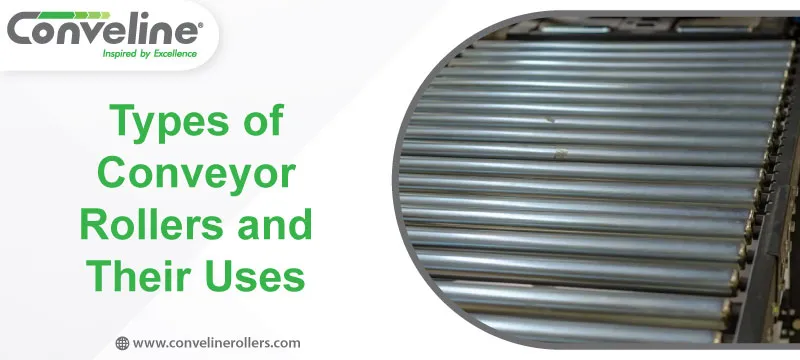
In any material handling or industrial automation setup, conveyor rollers play an important role. These conveyor rollers are important components of conveyor systems, which allow for the smooth and regulated flow of items from one location to another. It assists in less manual handling, lower worker costs, and higher overall productivity. From manufacturing plants and warehouses to distribution centers and packaging units, conveyor rollers ensure seamless transport of materials. With advancements in technology, a wide range of conveyor roller types is now available, each designed for specific functions and environments. This variety allows businesses to select rollers that best meet their operational demands, whether it's for heavy-duty applications, curved paths, or energy-efficient systems. Understanding the different types of conveyor rollers and their uses can significantly improve workflow, enhance productivity, and maintain product safety throughout the handling process.
This guide explores the various types of conveyor rollers and how each can optimize your material handling operations:
Different Types of Conveyor Rollers and Their Uses
Fixed Drive Conveyor Roller
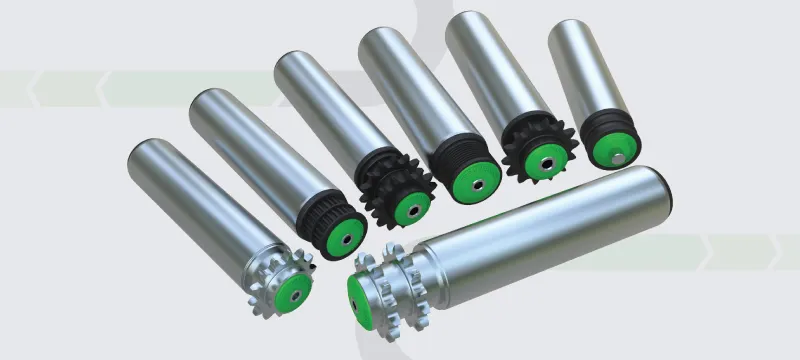
Fixed drive conveyor rollers are one of the most commonly used types. These rollers are powered by motors and are directly connected to a drive shaft. This setup ensures consistent speed and movement of materials across the conveyor system. The rollers rotate continuously, making them ideal for applications where constant motion is required.
Applications:
- Manufacturing lines
- Assembly lines
- Bulk material transportation
- Packaging facilities
These rollers are reliable and efficient in industries that require a steady flow of products or raw materials. They are best used in operations where stop-and-go movement isn't necessary.
Grooved Conveyor Roller
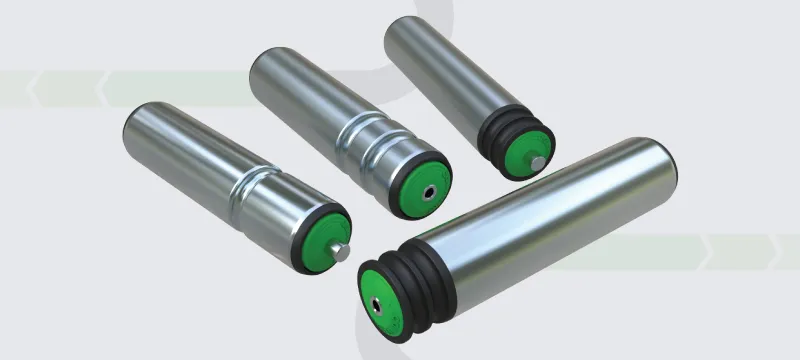
Grooved conveyor rollers feature specially designed grooves that allow for the integration of round belts. These grooves provide additional control and stability for products as they move along the conveyor line. Unlike fixed drive rollers, grooved rollers are typically used in systems where precise alignment and product orientation are important.
Benefits:
- Better product tracking
- Reduced product slippage
- Smooth integration with belt-driven systems
Applications:
- Food processing
- Electronics assembly
- Light packaging industries
The groove design also makes it easier to route belts in multi-lane or curved conveyors, allowing for more design flexibility.
Tapered Roller Curve

Tapered roller curves are specifically constructed rollers that enable items to move smoothly around corners or curves in a conveyor system. These rollers are tapered so the outer edge moves faster than the inner edge, guiding products along the bend without shifting or falling off.
Industries That Benefit:
- Warehousing and distribution centers
- Logistics companies
- Baggage handling systems at airports
Tapered roller curves help reduce friction and ensure products remain properly aligned during turns, minimizing damage and maintaining the flow of materials.
Accumulation Roller Conveyor
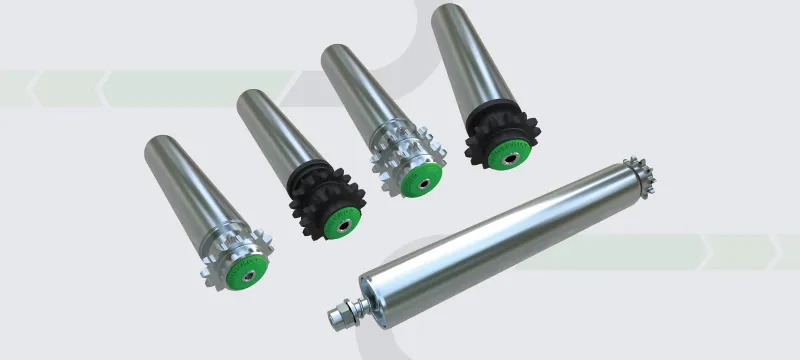
Accumulation roller conveyors are engineered to hold or "accumulate" products until the next section of the system is ready to receive them. This is done without stopping the entire system, thanks to friction-based or sensor-based zones that allow rollers to stop individually.
Advantages:
- Prevents product damage from collisions
- Controls product flow in high-speed systems
- Reduces wear and tear on machinery
Applications:
- Order fulfillment centers
- Packaging lines
- Sorting facilities
These systems are essential for buffering zones between different processes, especially in automated operations.
24V DC Power Roller Conveyor

24V DC power roller conveyors are environmentally friendly equipment with low-voltage motors incorporated right into the rollers. These systems are known for their quiet operation, minimal maintenance, and energy savings.
Benefits:
- Modular and easy to expand
- Low power consumption
- Safe for operators due to low voltage
Used In:
- E-commerce fulfillment centers
- Pharmaceutical distribution
- Automotive component handling
These conveyors are ideal for businesses aiming for sustainable operations and lower electricity bills without compromising performance.
Cross Transfer Unit

Cross transfer units are used to move materials across perpendicular conveyor lines, allowing seamless transitions between different directions in a conveyor layout. These units often feature powered rollers or belts and lifting mechanisms to align and transfer products smoothly.
Applications:
- Automated storage and retrieval systems
- Material distribution networks
- Heavy-duty assembly plants
Cross transfer units save time and space by eliminating the need for manual repositioning of goods between lines. They're excellent for challenging conveyor setups with continuous direction switches.
Motorized Drive Roller (MDR) Conveyor

MDR conveyors use rollers with built-in motors, allowing for individually controlled zones. These systems are energy-efficient, quiet, and highly reliable. Each roller can operate independently, enabling zero-pressure accumulation and precise control.
Advantages:
- Smooth and controlled movement
- High energy efficiency
- Reduced noise levels
- Safer operations
Industry Use Cases:
- E-commerce order sorting
- Warehouse automation
- Food and beverage handling
MDR conveyors allow businesses to customize speed, direction, and stopping points in real-time, improving workflow and throughput.
Where to Buy Conveyor Rollers?
When it comes to purchasing high-quality conveyor rollers, Conveline Systems Pvt. Ltd. is the best option for companies in India and across the world. Conveline, founded in 2014 in Ahmedabad, Gujarat, is now the leading manufacturer, supplier, and exporter of innovative conveyor roller systems for sectors like manufacturing, transportation, food processing, and warehousing. Their roller conveyor systems are engineered for durability, efficiency, and seamless material handling, offering customizable solutions to meet diverse operational needs. With a dedicated team of experts and a strong focus on innovation, Conveline ensures every product meets the highest industry standards, providing long-term reliability and value. Their commitment to customer satisfaction and technical support makes them a trusted partner for businesses looking to streamline operations and boost productivity. For the best in conveyor roller technology, Conveline Systems Pvt. Ltd. delivers excellence at every step.
Conclusion
Choosing the right conveyor rollers is essential for the success of any material handling system. From fixed drive rollers for consistent motion to motorized drive rollers for precise control, each type offers unique benefits tailored to specific industrial needs. Whether it's energy efficiency, space optimization, or product safety, using the right conveyor roller can significantly impact productivity and cost savings. Conveyor rollers are the backbone of efficient logistics, manufacturing, and distribution operations. Businesses who understand the various types and their applications may make taught selections and optimize their systems for outstanding efficiency.
Ready to upgrade your material handling? Contact us today:
- Call Now: +91-748-602-3925
- Email: info@conveline.com | sales@conveline.com


